

I. The Human Desire for Height: Exploring Our Inclination to Look Up.
The aspiration to be taller is profoundly human. It touches on areas of self-worth and confidence that few other physical attributes impact as significantly. For many, height is not just a measurement; it is intrinsically linked to how they feel about navigating the world. It is understandable that feelings of insecurity or dissatisfaction—sometimes referred to as height dysphoria—can deeply affect an individual’s body image and social interactions.1
In modern society, stature often carries a significant cultural weight. Our language, our media, and our unconscious biases frequently associate height with concepts like power, competence, and leadership. Studies have consistently shown that taller individuals are often perceived as more successful, earning higher salaries and potentially experiencing advantages in social and romantic settings.2 They may even be more likely to achieve higher education, even when controlling for cognitive ability, suggesting that subtle, unconscious biases are at play.2 This cultural valorization of the tall means that the desire for more height is a deeply emotional quest, seeking not just physical change but psychological validation.
Redefining the “Height Six Up” Goal
When an individual dreams of a dramatic, rapid change—the mythical “Height six up” in just a month—they are seeking control over their narrative. This drive is powerful and positive, but it must be channeled toward realistic biological outcomes. The clinical reality is that achieving six inches of permanent, linear growth as an adult or even a late adolescent is not possible through diet and exercise alone.3 The concept of “Height six up” must be redefined: it is the achievable goal of maximizing one’s genetic potential during the brief growth window and, crucially, gaining several inches of perceptual stature through optimized posture, core strength, and unshakeable confidence.
The journey we embark upon is not about magic; it is about mastery. It is about understanding that excessive worrying or obsession over one’s height can be counterproductive, potentially harming the very systems required for optimal growth.4 Instead, the energy must be redirected toward healthy eating, targeted exercise, and mental well-being. This comprehensive approach maximizes the three pillars of stature: understanding the biological clock, fueling the engine (diet and hormones), and mastering perceived height (routine and posture).

II. The Unbreakable Rules of Growth: Genetics and the Clock
Before pursuing any routine or diet plan, it is essential to establish the foundational scientific truth governing human height. The determining factor for final stature is overwhelmingly genetic. Research indicates that approximately 80 to 90 percent of an individual’s height is shaped by their genetic inheritance.5 This means height is a highly polygenic trait, influenced by the interaction of hundreds of different genes, making the potential for massive alteration through environmental factors alone very limited.6
While environmental factors, such as nutrition and lifestyle, play a smaller role, they are critical for ensuring an individual reaches the very ceiling set by their DNA. If the body is poorly nourished or perpetually stressed, even the best genetics cannot fulfill their full potential.4
The Anatomy of Linear Growth
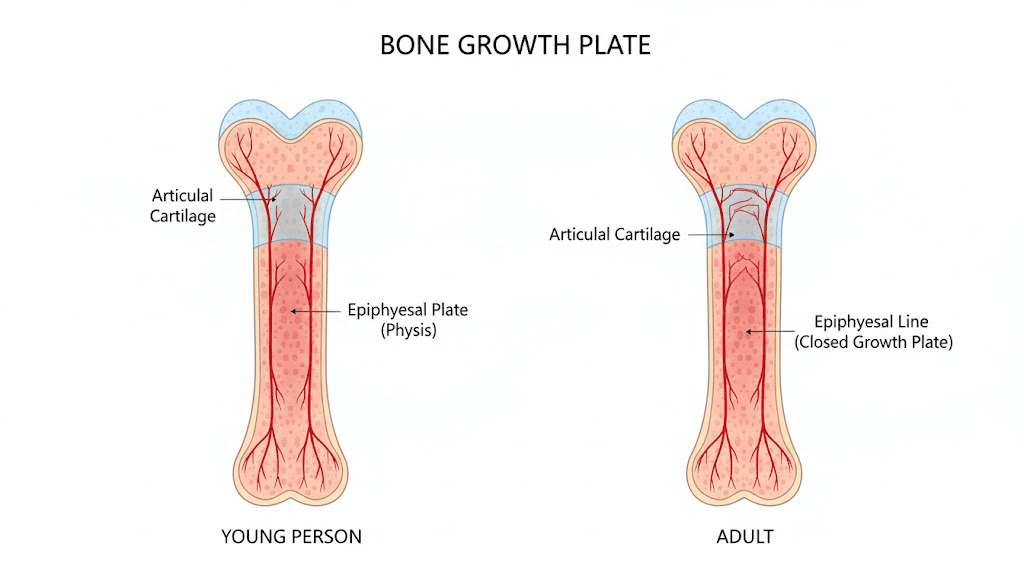
The mechanism responsible for linear height gain—the lengthening of the long bones (like femurs and tibias)—is centered entirely around structures known as the Physis, or Growth Plates.7 These plates are layers of cartilage located near the ends of long bones in children and adolescents. Bone growth occurs when specialized cells called chondrocytes within the growth plate undergo rapid mitosis (division) under the influence of growth hormone (GH).8
As these new chondrocytes stack up, they push the older cells toward the shaft of the bone (the diaphysis). The older cells eventually degenerate and are replaced by mineralized bone tissue through a process called ossification. This constant division and ossification are what cause the bones to grow longer.8 This intricate system is the sole driver of vertical growth.
The Fusion Timeline: The Necessary Reality Check
All height gain is dependent on the growth plates remaining “open”—meaning they are still composed of actively dividing cartilage. As an individual nears the end of puberty, profound hormonal changes occur that trigger the final stage of growth. Crucially, increasing levels of estrogen (a hormone present in both males and females) initiate the senescence of the growth plate.8
Estrogen leads to increased apoptosis (programmed cell death) of the chondrocytes.8 As the cartilage cells are depleted, the entire plate hardens into solid bone, a process known as Epiphyseal Closure or growth plate fusion. Once this fusion is complete, the growth plate disappears, leaving only a thin epiphyseal line visible on an X-ray.8
This closure dictates the hard deadline for linear growth potential:
- For girls, growth plates typically fuse around 14 to 16 years old on average.3
- For boys, growth plates typically fuse between 16 and 19 years old on average, though in some instances, they may remain open slightly later, sometimes up to age 25.3
The fundamental biological constraint is this: Once the growth plates have fused, linear bone lengthening stops completely, and they do not reopen.11 For individuals past these typical age ranges, permanent height gain is biologically impossible.3
The desire for six inches of new height within a month, therefore, must be understood in this context. If the individual’s plates are closed, the goal shifts entirely to maximizing perceived height through posture and spinal health, which can yield rapid, noticeable results. If the plates are still open, the focus is on optimizing the environment to ensure every fraction of an inch of potential is realized before the window closes.
Table: Critical Milestones for Linear Height Growth
| Growth Phase | Typical Age of Growth Plate Closure (Range) | Primary Height Focus |
| Female End of Puberty | 14 – 16 years | Maximize potential; Focus shifts to skeletal consolidation. |
| Male End of Puberty | 16 – 19 years (up to 25 rarely) | Maximize potential; Focus shifts to skeletal consolidation. |
| Post-Closure Adulthood | N/A (Plates are fused bone) | Maximize perceived height via posture; Maximize bone mineral density. |
III. The Engine of Stature: HGH, Sleep, and Stress Management
While genetics determines the blueprints for maximum height, the primary hormonal driver that executes this plan is Human Growth Hormone (HGH). HGH directly stimulates the mitotic activity within the growth plates 8 and signals the liver to produce Insulin-like Growth Factor-1 (IGF-1), which together orchestrate skeletal and tissue growth. Optimizing the natural release of HGH through specific lifestyle adjustments is the most potent, non-pharmacological way to maximize height potential for those still growing.
The Night Shift: HGH and Sleep Quality
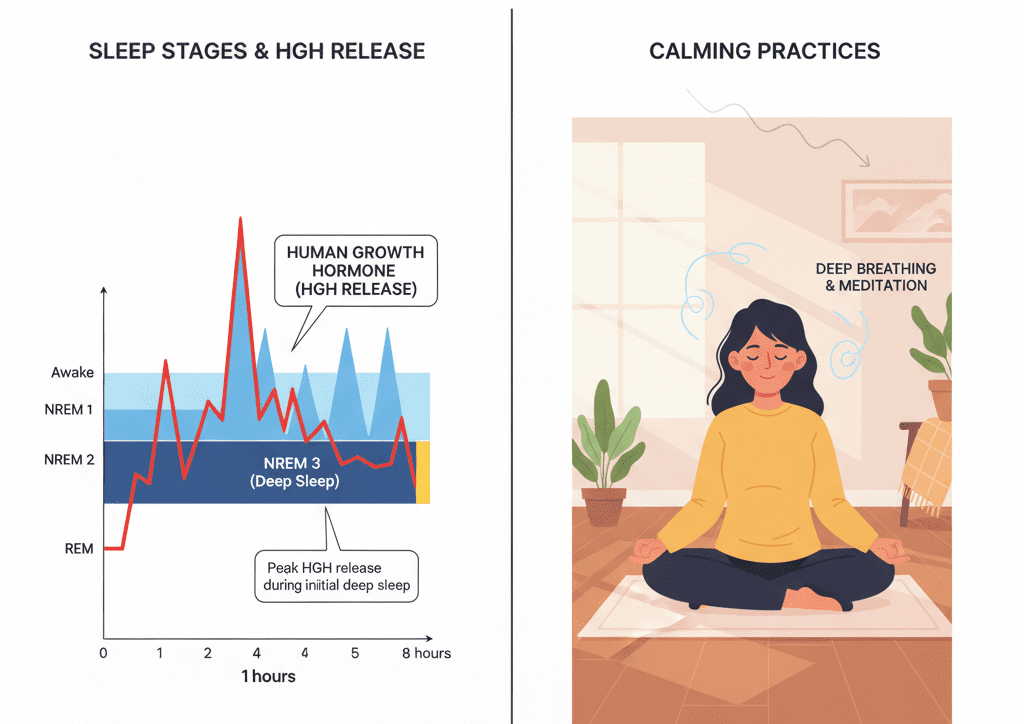
The link between HGH and sleep is undeniable, and perfecting sleep hygiene is arguably the single highest-return routine element for growth. HGH is not released uniformly throughout the day; instead, it is secreted in pulsatile bursts, with the largest and most significant release occurring shortly after sleep onset, coinciding with the first episode of Slow-Wave Activity (SWA), or deep sleep.12
For those aiming to optimize growth, consistency in sleep is paramount. Adults and adolescents should strive for at least 7 hours of quality, uninterrupted sleep per night.13 Getting to bed early enough to capture that vital initial SWA peak is more important than simply aiming for a specific number of hours. If sleep patterns are erratic or delayed, the natural hormonal cascade supporting growth is disrupted.
Furthermore, specific nutritional timing can enhance this natural overnight HGH spike. Research has indicated that consuming amino acid sources, such as 2,000 milligrams of Glutamine or a scoop of whey protein, in a fasting state (ideally 2 to 3 hours after the last meal) just before bed, can significantly elevate serum HGH levels—by as much as 400% above the usual nightly spike for whey protein, or 430% for glutamine.14 This strategic nutritional intervention leverages the body’s natural release cycle, amplifying the growth signal during the crucial restorative period.
The Stress Trap: How Cortisol Steals Inches
The endocrine system provides a powerful counterpoint to growth: the stress response. Chronic, unrelenting psychological or physical stress results in the sustained elevation of the hormone cortisol. This chronic activation of the stress system and the resulting hypercortisolism have consequential negative impacts on growth potential.15
Scientific studies confirm that chronic stress directly inhibits the production of HGH and IGF-1.15 This means that the obsession and anxiety (the “attitude” component) about height, which are common emotional drivers, can inadvertently feed back into the body’s chemistry, actively suppressing the hormones required for linear growth.4 The implications of chronic stress extend beyond height; high cortisol suppresses osteoblastic activity, negatively impacting bone density and overall skeletal health.15
Therefore, mastering stress is not merely about emotional well-being; it is a direct physiological intervention for growth optimization. Simple, repeatable routines can mitigate this suppression:
- Deep Breathing Practice: Engaging in deep, controlled abdominal breathing activates the parasympathetic nervous system, countering the stress response. Focusing on inhaling through the nose and exhaling through the mouth, counting slowly to 5 for each breath, for at least 5 minutes daily, is a highly effective, immediately applicable technique.17
- Mindfulness and Meditation: Incorporating mindfulness practices helps manage the excessive worrying and anxiety associated with height or other life stresses, mitigating the negative feedback loop of cortisol on growth hormones.4
IV. Fueling the Framework: The Definitive Height Maximizing Diet Plan
Inadequate nutrition is recognized as a primary cause of stunted growth, reinforcing the principle that one must consume a balanced, nutrient-dense diet to reach full genetic potential.4 The height-maximizing diet is not defined by quantity, but by the strategic intake of specific nutrients that support GH/IGF-1 action and skeletal construction.
The Core Growth Building Blocks
A truly effective diet plan targets three essential nutrient pillars: protein and specialized amino acids, skeletal strengthening minerals, and key vitamins.
Amino Acids and Protein
Protein is vital for tissue repair and growth, providing the necessary amino acid precursors for HGH optimization.19 Specific amino acids are potent natural secretagogues—substances that encourage hormone release:
- Glutamine: This powerful amino acid can cause a significant, temporary increase in HGH levels, with studies showing an effect even at small doses.20 Incorporating glutamine-rich foods like spinach, meat, eggs, fish, and unsweetened yogurt supports this natural hormonal boost.20
- Arginine and Ornithine: Dietary arginine intake has been suggested to play a dose-dependent physiological role in linear growth for healthy children, likely due to its role in increasing GH/IGF-1 release.21 While supplementation requires large doses (5 to 9 grams orally) to cause a significant acute HGH rise, natural intake is encouraged.22 Ornithine, often working synergistically with arginine, is vital for protein synthesis and can be found in fish, chicken, eggs, or beef.20
Strategic consumption of these amino acids, particularly after exercise, can maximize HGH production derived from both the physical stimulus and the nutritional support.20
Skeletal Strength Synergy (Calcium, Vitamin D, and Zinc)
For bone growth and, crucially, for bone mineral density (BMD) consolidation that continues into young adulthood, a synergistic nutrient profile is mandatory.
- Vitamin D: Essential for robust bone growth and development, Vitamin D plays a critical role in facilitating calcium absorption in the gut. Deficiency in this vitamin is known to slow overall growth.19
- Calcium: The primary structural mineral of bone. For young adults (ages 18 to 25) whose growth plates may have recently closed, focusing on adequate calcium intake is paramount for achieving and preserving Peak Bone Mineral Mass.23 Bone mineral consolidation continues in young adulthood even after linear growth ceases. Studies show that dairy products fortified with both calcium and Vitamin D have a favorable effect on BMD.24 Furthermore, calcium taken concomitantly with Vitamin D supplementation increases BMD more effectively than Vitamin D alone.25
- Zinc: This mineral is known to aid in the complex processes involved in height and linear growth.19
The Essential Daily Plate: Top Food Sources
To ensure these vital nutrients are consumed consistently, the following foods should be prioritized:
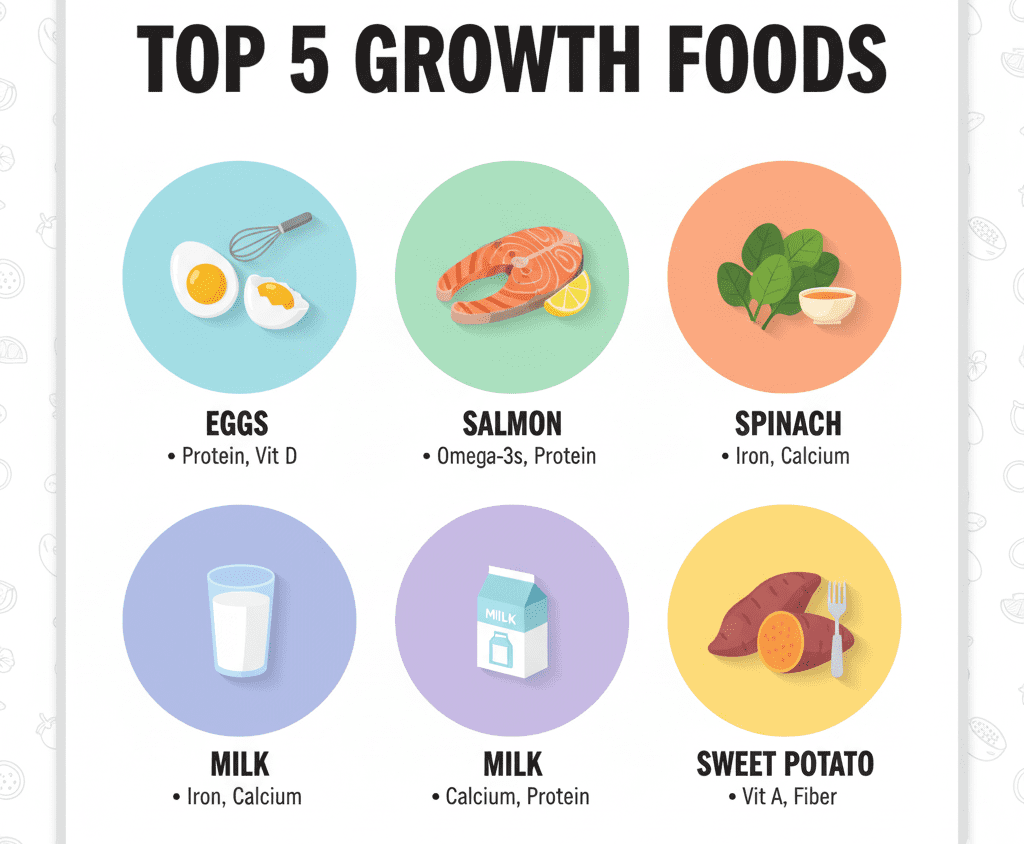
- Dairy: Milk and fortified dairy products are among the best sources of protein, calcium, and Vitamin D, making them highly recommended during development and through young adulthood.24
- Eggs: An unparalleled source of protein, Vitamin D, and a spectrum of other minerals vital for growth, including B vitamins and folate.19
- Lean Meats and Fish: Chicken provides high levels of protein and Vitamin B, while fatty fish like salmon and sardines offer high protein, Vitamin D, and beneficial Omega-3 fatty acids.19
- Vegetables: Colorful vegetables contribute crucial micronutrients. Leafy greens (spinach, kale) are rich in calcium, iron, and Vitamin K, which supports bone health. Sweet potatoes are rich in Vitamins A, B6, and C, and the mineral manganese. Carrots contain beta-carotene, which is known to assist in the optimal absorption of calcium.19
Finally, an interesting dietary component to consider is Coconut Oil. It has been observed to cause a rapid surge in HGH levels within 30 to 90 minutes of consumption, and these high levels can persist for almost 4 hours.20 Incorporating coconut oil twice daily—perhaps once in the morning and again in the late afternoon—can help maintain elevated growth hormone activity throughout the waking hours.20
Table: Core Nutritional Pillars for Maximizing Growth Potential (The Daily Plate)
| Key Nutrient | Role in Height/Bone Growth | Top Food Sources | Timing Consideration |
| Protein & Amino Acids | Essential for tissue repair, growth, and HGH release optimization. | Chicken, Eggs, Fatty Fish, Beef, Unsweetened Yogurt [19, 20] | Ensure sufficient intake (especially Glutamine/Whey) before sleep to leverage the HGH spike.14 |
| Vitamin D & Calcium | Crucial for calcium absorption and bone mineralization/consolidation. | Fortified Dairy, Fatty Fish, Leafy Greens (Kale, Spinach) [19, 24] | Continuous daily intake is necessary for skeletal consolidation through young adulthood.23 |
| Zinc | Aids in the overall growth process and cellular repair. | Beef, Beans, Oysters, Nuts 19 | Daily balance. |
V. The Posture Transformation: Achieving “Height Six Up” Visually
For individuals whose growth plates are closed—the majority of the late adolescent and young adult population—the sole focus of a height routine must be posture correction and spinal decompression. This shift in focus is crucial because while no stretching or exercise can physically lengthen a fused bone 27, correcting decades of poor alignment can instantly make a person appear taller. This optimization of perceived height is the achievable reality of the “Height six up” goal within a short timeframe.
The Science of Transient Height Gain
Height is not static; it fluctuates slightly throughout the day. This variation is due to the natural compression and decompression of the fluid-filled cartilage discs located between the vertebrae in the spine.3 Activities like sitting or remaining sedentary increase pressure on these discs, causing them to compress and leading to a temporary height loss that can be as much as 1.5 centimeters (about half an inch).3
Stretching and spinal extension exercises achieve rapid, temporary height increases by decompressing these spinal discs, restoring the spine to its optimal length and alignment.3 This visible change, achieved quickly through routine consistency, provides the immediate, emotional win that fuels long-term motivation.
The Daily “Height Six Up” Posture Routine
Consistency is paramount for lasting postural change. A dedicated 5 to 15-minute routine performed daily, focusing on strengthening the core and improving spinal flexibility, is necessary to transition from temporary height gain to permanent postural improvement.30
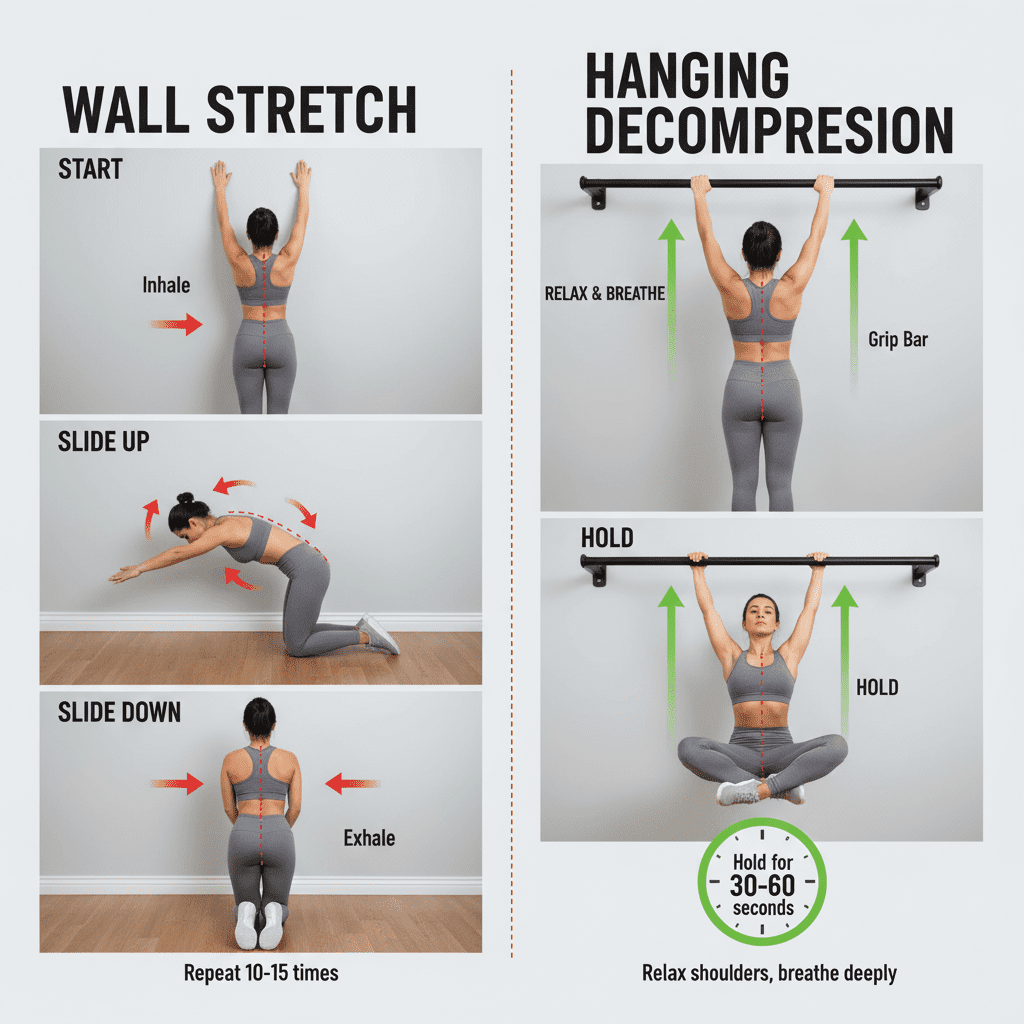
1. The Wall Stretch (Wall Angel)
This exercise is one of the most effective, simple fixes for correcting the hunched-over posture commonly known as kyphosis or “text neck”.31 Excessive rounding of the upper back significantly reduces perceived height.29
Routine: Stand flat against a wall with heels, glutes, and shoulder blades touching. Keep feet about six inches from the wall. Engage the core to press the lower back against the wall, neutralizing any excessive arch. Raise arms to shoulder height, elbows bent at 90 degrees (like a goalpost). Slowly slide the arms upward, maintaining contact with the wall, and then return. This movement strengthens postural muscles and realigns the body into its natural, upright position.31
2. Hanging Decompression
Using a pull-up bar, passive hanging leverages gravity to counteract the daily compression forces acting on the spine.
Routine: Grasp a sturdy pull-up bar (or similar apparatus) and hang with arms fully extended, allowing the body to relax completely. The goal is to feel the spine gently decompress and lengthen. Hold this position for 30 to 60 seconds, completing 2 to 3 sets.32 While hanging does not increase bone length 28, it maximizes spinal disc height.
3. Cobra Stretch (Bhujangasana)
This foundational yoga pose is a spinal extension exercise that promotes flexibility and strengthens the lower back.33
Routine: Lie on the stomach, placing hands under the shoulders. Gently press up to lift the chest off the floor while keeping the lower body (hips and pelvis) grounded. Hold the stretch for 30 seconds and repeat for 2 sets. This stretch actively reverses the flexion of the spine caused by prolonged sitting.32
4. Cat-Cow Stretch
The Cat-Cow sequence (moving from spinal flexion to extension) is excellent for improving overall spinal flexibility and mobility, ensuring all vertebral segments can articulate optimally.32
5. Bridge Exercise (Pelvic Tilt)
Also known as a pelvic tilt, this exercise strengthens the core and lower back while stretching tight hip flexors that often pull the pelvis out of alignment, contributing to poor posture.
Routine: Lie flat on the back with knees bent and feet flat on the floor. Engage the lower abdominal muscles and lift the hips off the floor until the body forms a straight line from shoulders to knees. Hold briefly and lower. Repeat 5 to 30 times daily.33
Long-Term Postural Support
Maintaining a tall, upright stature requires muscular endurance. A strong core is indispensable for supporting proper spinal alignment and preventing the recurrence of slouching.31 Incorporating fundamental core stability exercises, such as planks and dead bugs, ensures that the body has the strength to hold the newly optimized, decompressed posture throughout the day.
The timing of this routine is critical for maximizing visual impact. Since compression is greatest after long periods of inactivity or sitting, performing the stretching and decompression exercises either upon waking or after a lengthy workday is recommended to restore the maximum possible temporary height just when it is most visible.29
VI. The Power of Persistence: Consistency, Routine, and Mindset
The desire for a quick fix—getting results “within a month”—is addressed most effectively through the rapid, visible gains achieved by the posture routine. However, sustainable, long-term optimization of both health and perceived stature depends entirely on absolute persistence.
The Consistency Blueprint
Biological change is a marathon, not a sprint. While the initial euphoria of postural correction is rapid, maintaining that correction and maximizing biological growth potential requires unrelenting commitment. Developing a fixed routine integrates health goals seamlessly into daily life, moving the necessary actions beyond reliance on willpower.30
For instance, the posture routine should be scheduled daily (perhaps morning and evening), and sleep hygiene, which drives HGH release, must become non-negotiable every single night. Establishing a consistent schedule acts as a psychological anchor, restoring a sense of control over a process (growth) that often feels arbitrary and entirely genetic. This focus on control and routine mastery is vital because it actively counters the negative psychological stress that inhibits growth hormones.15 By focusing on mastery of the routine, the individual reduces performance anxiety, thereby mitigating the internal hormonal suppression caused by worry.
Tracking Progress and Redefining Success
For those still growing, tracking consistency in diet, sleep, and exercise is the best metric. For those whose plates are closed, measuring linear height gain is futile and demoralizing. Success must be redefined. Instead of a tape measure, the user should track actionable metrics:
- Adherence Rate: How often was the posture and sleep routine followed?
- Sleep Quality: Tracking deep sleep duration (SWA) and sleep latency.
- Stress Management: Subjective reduction in anxiety or use of breathing techniques.
- Confidence: Subjective feeling of standing taller and improved self-perception.
Accountability is a powerful mechanism for maintaining this consistency. Sharing goals with a trusted friend, family member, or health coach can provide motivation and structural support necessary to navigate inevitable setbacks.30 The key is recognizing that when a step is missed, the response must be to immediately recommit, rather than succumbing to the impulse to abandon the entire routine.
Conclusion: The True Measure of Stature
The comprehensive guide to achieving “Height six up” potential reveals a central truth: physical height is largely determined by an immovable genetic ceiling and a non-negotiable biological clock. While the dream of six new inches in a month is biologically unrealistic for linear bone growth after puberty, significant, visible, and enduring results are absolutely achievable by mastering three core areas:
- Hormonal Optimization: Prioritizing quality sleep and deep rest to maximize the natural release of Human Growth Hormone, while aggressively mitigating chronic stress (cortisol) that actively suppresses growth factors.
- Nutritional Support: Consuming a targeted diet rich in protein, key amino acids (Glutamine, Arginine), and the synergistic pairing of Calcium and Vitamin D, which is essential for maximizing growth potential and ensuring long-term skeletal consolidation.
- Postural Mastery: Implementing a dedicated daily routine of spinal decompression and core strengthening exercises (like the Wall Stretch and Hanging) to correct alignment, reverse gravitational compression, and achieve immediate, noticeable gains in perceived stature.
The ultimate measure of stature, however, is not physical inches but psychological height. The confidence derived from mastering one’s health, optimizing hormonal function, and consciously choosing to stand upright and present one’s full physical self is the true, lasting “Height Six Up” achievement. By redirecting the passion and sensitivity often focused on height toward holistic well-being, the individual maximizes their optimal potential—physically, hormonally, and mentally.